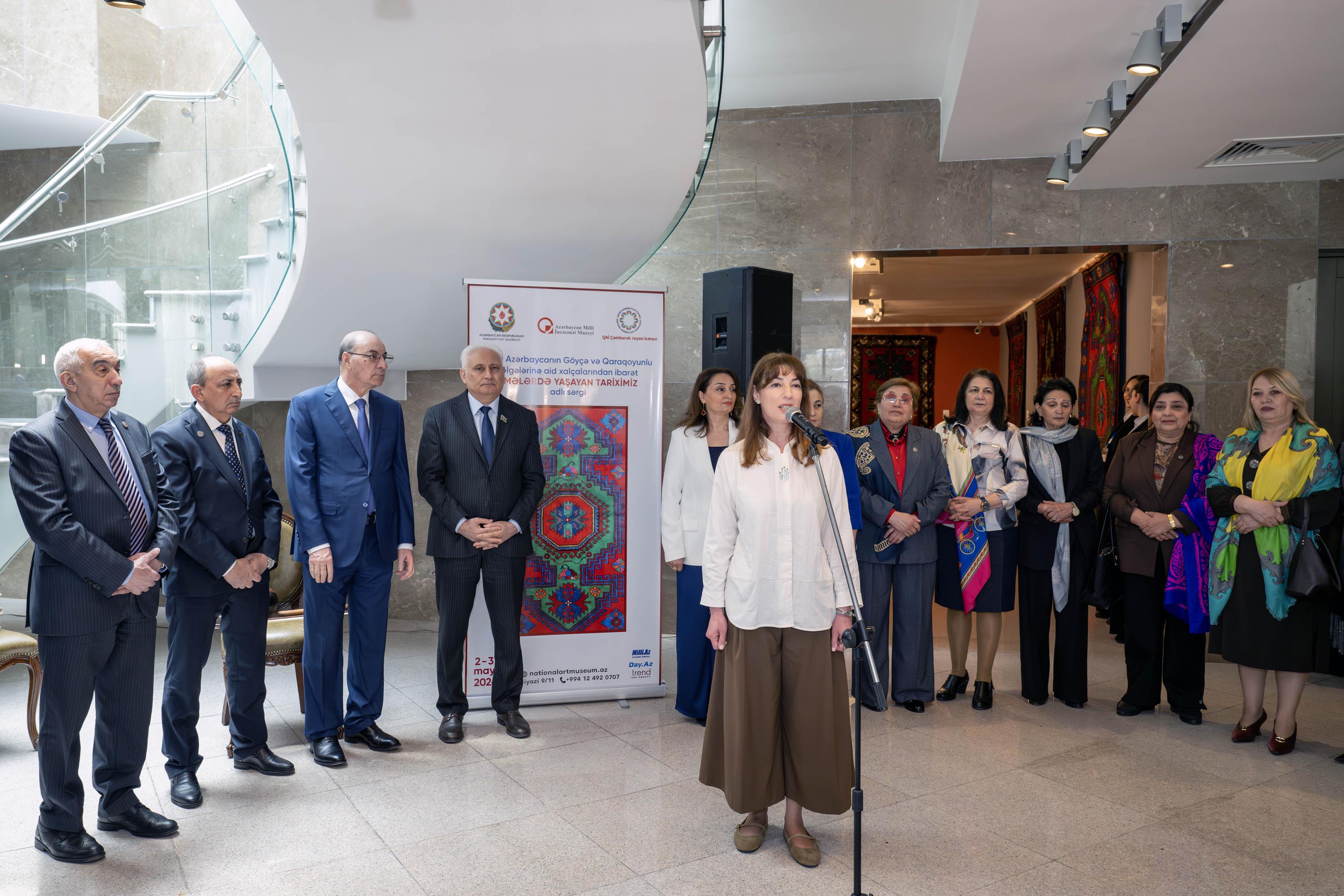
On May 2, the exhibition titled “History Living in Knots” opened at the Azerbaijan National Museum of Art, dedicated to the Goycha and Garagoyunlu regions of Western Azerbaijan.
On May 2, the exhibition titled “History Living in Knots” opened at the Azerbaijan National Museum of Art, dedicated to the Goycha and Garagoyunlu regions of Western Azerbaijan.
At the opening ceremony of the exhibition, dedicated to May 5 – Carpet Weaver’s Day, speeches were delivered by the museum’s director, Honored Cultural Worker Shirin Malikova; Aynura Mammadova, responsible for women’s affairs in the Chambarak district community; the community chairman, Professor Avaz Alakbarov; the chairman of the Western Azerbaijan Community, Member of Parliament, Professor Aziz Alakbarli; Deputy Chairman of the Executive Committee, MP Hikmat Babaoghlu; and Rukhsara Adilgizi, responsible for culture in the Chambarak district community. In their speeches, they highlighted the historical and cultural significance of the exhibition. It was noted that the exhibited carpets are valuable heritage examples that preserve the historical memory, cultural identity, and everyday traditions of Western Azerbaijan. The importance of such exhibitions in preserving Azerbaijan’s cultural heritage and passing it on to future generations was emphasized. It was also underlined that carpet weaving is closely connected with women’s creativity and that preserving this tradition is of great importance.
In the artistic part of the event, talented musicians performed Azerbaijani folk songs and national dances.
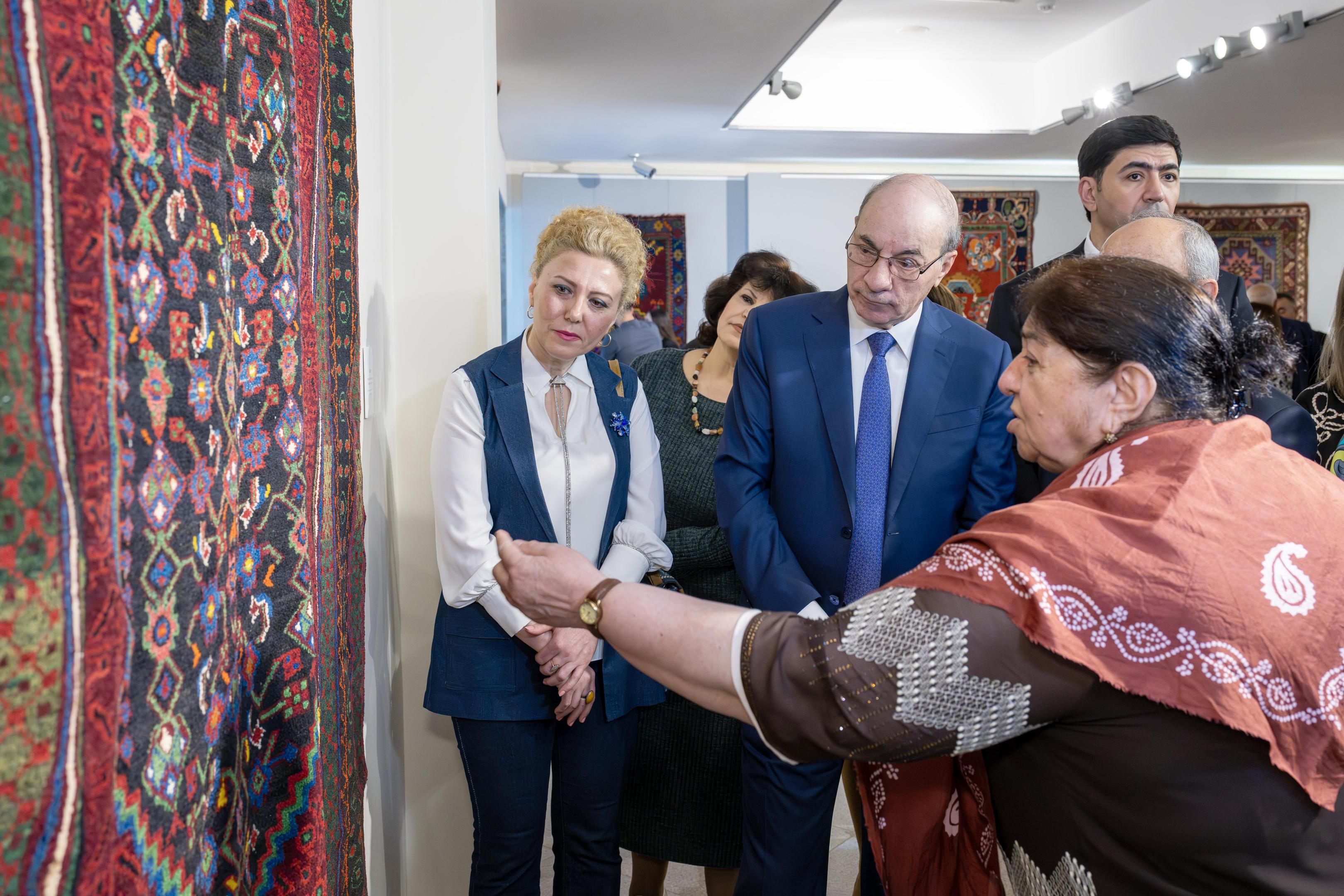
Afterwards, the guests familiarized themselves with the exhibition.
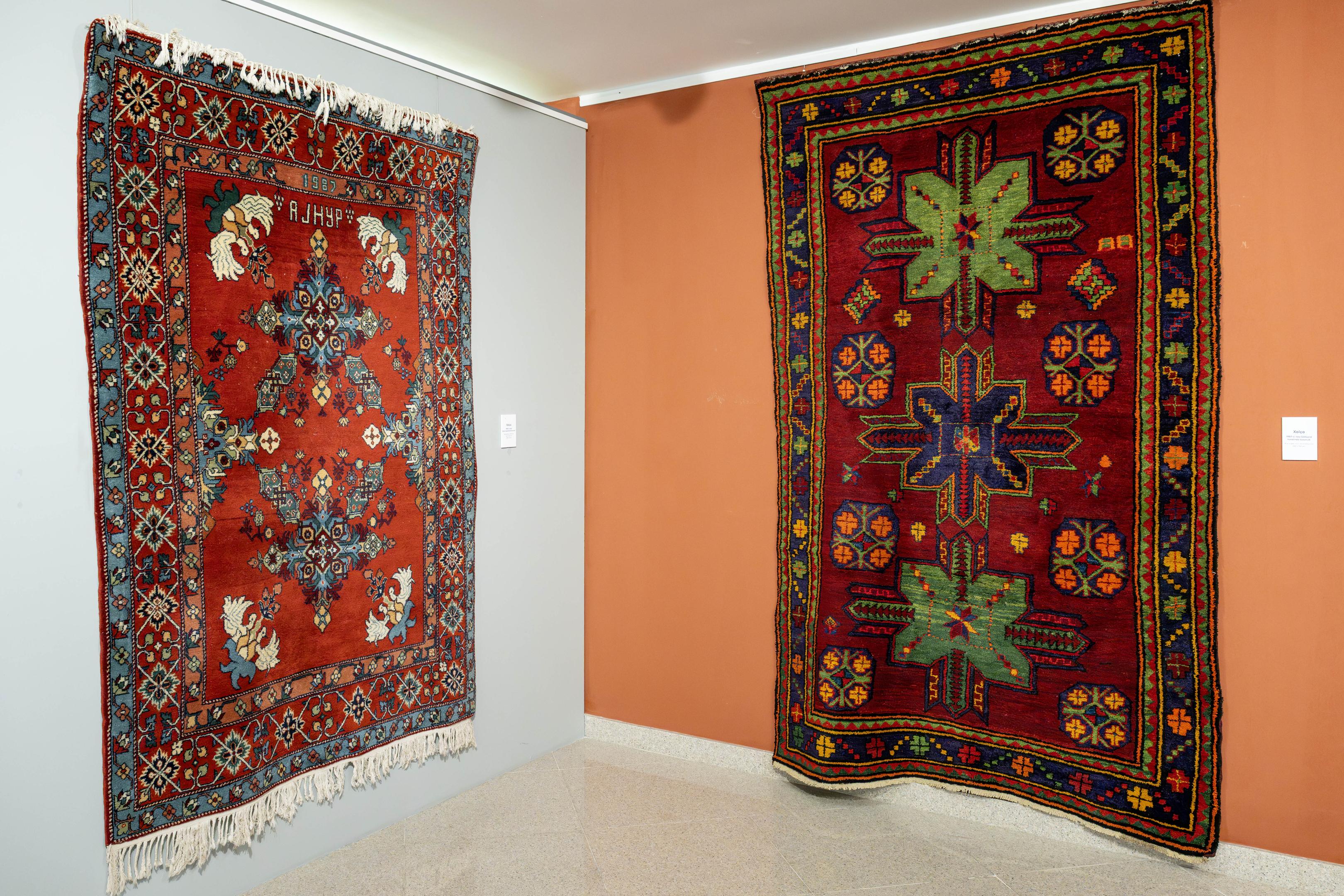
The exhibition features carpets from the Goycha and Garagoyunlu regions, woven by Azerbaijani women who once lived in those areas. These carpets were preserved as the most valuable and sacred items and brought to Azerbaijan during the last wave of deportations in 1987–1991. They have survived to this day as living examples of national heritage.
Although the presented carpets mainly belong to the Iravan center, their ornamental and compositional systems clearly reflect artistic features characteristic of other classical carpet-weaving centers as well. The geometric elements, symbols, and compositional structure reveal the deep layers of national identity.
The exhibited pieces also artistically reflect the rich nature of the Goycha and Garagoyunlu regions. The motifs of narcissus, violet, and tulip depicted in the carpet ornaments preserve the aesthetic beauty and memory of these lands to this day.
-
Type :
Exhibitions -
Time :
May 2, 2026 - May 3, 2026
event gallery